
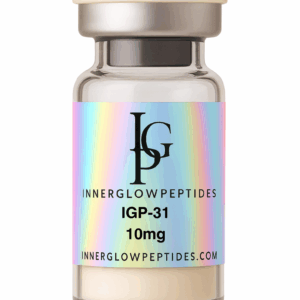
IGP-31
€40.00
IGP-31 is supplied as a lyophilized powder and requires bacteriostatic water for reconstitution.
Researchers study this synthetic tetrapeptide for its effects on mitochondrial function, oxidative stress reduction, and energy metabolism.
For Research Purposes Only – Not for Human Consumption.”
Introduction to Mitochondrial IGP-31
Mitochondrial IGP-31 is a specialized peptide often discussed in advanced research focused on cellular energy and mitochondrial protection. It is commonly explored for its potential role in supporting mitochondrial integrity, which is essential for overall cellular performance and vitality. As mitochondria are known as the “powerhouses” of the cell, compounds like IGP-31 attract attention for their possible impact on energy production.
Understanding Mitochondrial Function
Mitochondria are responsible for generating ATP, the primary energy currency of the body. When mitochondrial function declines, it can affect energy levels, cellular repair, and metabolic efficiency. Mitochondrial IGP-31 is studied for its potential to interact with mitochondrial membranes, helping maintain their structure and function under stress conditions.
Composition and Structure
IGP-31 belongs to a class of peptides designed to target mitochondria specifically. Its structure allows it to penetrate cell membranes and localize within mitochondria. This targeted approach is important because it enables direct interaction with mitochondrial components, which may improve efficiency and reduce damage caused by oxidative stress.
Mechanism of Action
The primary mechanism associated with Mitochondrial IGP-31 involves stabilizing mitochondrial membranes and reducing the production of reactive oxygen species (ROS). By limiting oxidative stress, it may help preserve mitochondrial function. Additionally, it is believed to support electron transport chain efficiency, which is crucial for optimal ATP production.
Potential Benefits in Research
Research into Mitochondrial IGP-31 suggests potential benefits in areas such as improved cellular energy, enhanced recovery from stress, and protection against mitochondrial dysfunction. These effects make it a subject of interest in studies related to aging, fatigue, and metabolic disorders, although findings are still evolving.
Role in Oxidative Stress Reduction
Oxidative stress occurs when there is an imbalance between free radicals and antioxidants in the body. Mitochondrial IGP-31 may help reduce this imbalance by limiting the damage caused by free radicals within mitochondria. This protective effect is significant because prolonged oxidative stress can impair cellular health over time.
Applications in Scientific Studies
IGP-31 is frequently explored in laboratory and preclinical settings. Researchers examine its effects on cellular models to better understand how mitochondrial-targeted peptide influence energy metabolism and cell survival. It is not typically marketed as a consumer product but rather studied within controlled research environments.
Comparison with Other Mitochondrial Peptides
Compared to other mitochondrial-targeting peptides, IGP-31 is often highlighted for its specificity and efficiency in reaching mitochondrial membranes. While similar compounds exist, IGP-31 is distinguished by its potential stability and ability to maintain activity within the cellular environment.
Safety and Considerations
As with many research peptide, the safety profile of Mitochondrial IGP-31 is still under investigation. Most available information comes from experimental studies rather than large-scale human trials. Therefore, its use is generally limited to research purposes, and caution is advised when interpreting claims about its effects.
Future Research and Outlook
The future of Mitochondrial IGP-31 research looks promising as interest in mitochondrial health continues to grow. Ongoing studies aim to better understand its mechanisms, potential therapeutic applications, and long-term effects. As scientific knowledge expands, IGP-31 may play a role in advancing treatments related to energy metabolism and cellular resilience.
Be the first to review “IGP-31”
Related products
Liquid
Mitochondrial
Sprays
Sprays
Peptide Blend
Peptide Blend
Sprays
Peptide Blend
Reviews
There are no reviews yet.